
5F, W2, Chengxin Building , Tian An Shen Chuang Valley Industrial Center, Fenggang Town, Dongguan City, Guangdong Province,China 523681
Views: 0 Author: Site Editor Publish Time: 2026-07-08 Origin: Site


Network engineers constantly face a frustrating deployment friction. They must integrate legacy or specialized 24V passive equipment into modern 48V IEEE 802.3af/at network infrastructure. Devices like specific wireless bridges and access points often refuse to communicate over new switch protocols. You cannot simply plug a passive node into an active switch. This direct connection poses a severe physical risk, often causing permanent hardware damage because active negotiation protocols clash with passive power lines. Modern infrastructure demands streamlined operations. The converter delivers this by maintaining strict isolation between protocols. To resolve this, the industrial 48V to 24V POE Converter serves as a necessary hardware bridge. It preserves data integrity, enables centralized power management, and maintains network security. Read on to learn how to bridge this voltage gap safely without running separate power cables.
Protocol Translation: 48V to 24V converters safely bridge active IEEE 802.3af/at switches with 24V passive endpoint devices.
Infrastructure Consolidation: Enables centralized UPS backup and remote power cycling (via the 48V switch) for remote 24V nodes.
Evaluation Mandates: Industrial deployments require ≥1500V RMS magnetic isolation and a 36–60V input tolerance to handle load-induced voltage drops.
Throughput Protection: Properly engineered converters prevent EMI-induced Bit Error Rate (BER) spikes that throttle Gigabit connections down to 100Mbps.
Many IT professionals harbor a misconception about network standards. They assume all power-over-ethernet devices speak the same language. However, 24V PoE remains a proprietary passive protocol. It features no handshake mechanism. It sends continuous power blindly. In contrast, 48V systems operate on strict IEEE 802.3af/at negotiation standards. They expect a formal communication sequence before transmitting power. Active switches look for a specific 25k ohm resistance signature before turning on the power flow.
Plugging a 24V passive device directly into a 48V standard switch creates an immediate hardware burnout risk. Standard switches bypass negotiation when they detect incorrect resistance signatures. Or worse, a poorly configured port forces power delivery abruptly. They might flood the passive endpoint with 48 volts. This overvoltage often results in immediate endpoint failure. Components overheat instantly. You lose expensive equipment in seconds. The magic smoke escapes. Hardware replacement becomes mandatory.
Space constraints further complicate matters. Deploying dual power supplies creates a massive operational headache. You might try placing one 48V supply and one 24V brick together. Industrial environments often rely on cramped NEMA outdoor enclosures. You simply do not have room for multiple bulky power bricks. Cable management becomes a nightmare. AC power strips take up valuable DIN rail space. Engineers must maximize every square inch. Adding multiple DIN-rail power supplies limits space for critical networking hardware. You also introduce multiple points of failure. Managing alternating current (AC) lines inside a tight enclosure increases electromagnetic interference. Relying on a single 48V feed simplifies the physical topology tremendously. You run one data line. You avoid running parallel high-voltage cables.
Running a unified 48V backbone delivers immense resilience. A centralized UPS can back up all remote endpoints simultaneously. When you connect 24V devices through an inline 48V to 24V POE Converter, they join this unified power ecosystem. A single server-room UPS protects the entire network from blackouts. You eliminate the need for localized battery backups. Maintenance becomes highly centralized.
Remote power cycling becomes effortless. Locked 24V edge devices normally require an engineer to visit the physical site. Agricultural monitoring stations or factory roof cameras sit far away. Truck rolls drain valuable time and resources. With centralized management, IT admins can reboot these edge devices remotely. They simply bounce the corresponding 48V port on the managed switch. The converter temporarily drops the 24V feed. This forces a clean hardware reboot. Downtime shrinks from hours to mere seconds.
Conversion also resolves unstable power inputs. Solar arrays and IoT battery banks often output fluctuating DC voltages. Wide-voltage compatibility allows you to regulate these unstable sources. Intelligent converters stabilize dips and spikes easily. The converter transforms inconsistent power into clean energy. Sensitive components receive exactly what they need. System crashes decrease drastically.
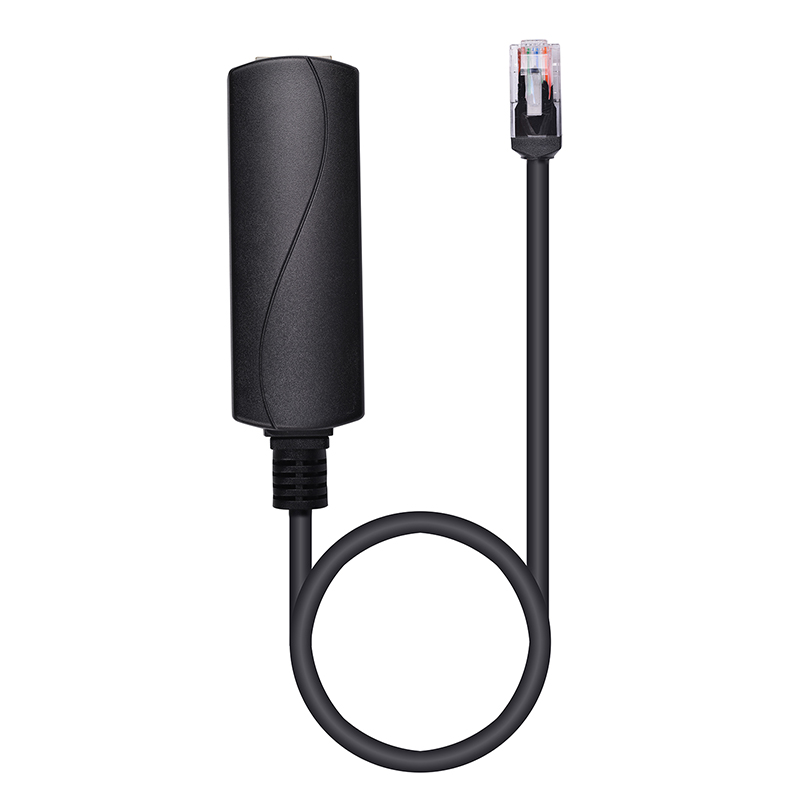
Selecting the correct hardware bridge depends entirely on your endpoint interface. An inline PoE Converter takes 48V standard input. It outputs 24V Passive PoE seamlessly. It combines power and data on a single RJ45 cable. This design perfectly suits legacy wireless bridges. Older Ubiquiti or Mikrotik units rely heavily on this combined input format. They lack secondary power ports entirely. They require power injected directly over the data pairs.
Conversely, a PoE Splitter performs a radically different separation task. It takes 48V input and splits it into two discrete lines. You get an Ethernet data line alongside a separate 24V DC barrel jack. This configuration serves non-PoE industrial sensors. It also powers PLCs or legacy security cameras. These devices require direct terminal power rather than RJ45 delivery. They process data over standard ethernet without expecting power on those pins.
Consider the decision matrix below to map your choices accurately. This framework prevents expensive purchasing errors:
Device Characteristic | Inline PoE Converter | PoE Splitter |
|---|---|---|
Power Reception | Combined via RJ45 port | Separated via DC barrel / Terminal block |
Protocol Output | 24V Passive PoE | 24V DC + Standard Ethernet Data |
Ideal Use Cases | Wireless Bridges, Legacy APs | PLCs, IP Cameras without PoE, IoT Sensors |
Installation Form | Inline between switch and endpoint | Mounted directly next to the endpoint |
Cabling Required | Single Ethernet cable | One Ethernet cable + One DC power patch cord |
Network stability hinges on proper component evaluation. You must review technical specifications carefully. Avoid purchasing basic modules blindly.
Do not assume your 48V line delivers exactly 48 volts constantly. Real-world 802.3at cable runs often experience severe voltage drop. Thin copper wires resist current flow over long distances. Under heavy load or across extended cable runs, the supply can dip to roughly 42V. Industrial converters must support a wide 36V-60V input range. A rigid 48V-only requirement will lead to random disconnects. When cameras draw peak power at night, rigid modules fail. Broad tolerance ensures continuous operation despite line fluctuations.
Industrial deployments mandate strict isolation standards universally. You should require ≥1500V RMS magnetic isolation on all modules. This feature complies directly with IEC 60950-1 safety standards. It actively prevents dangerous ground loops across varying earth potentials. Ground loops induce erratic behavior in digital sensors. Additionally, demand ±15kV ESD (Electrostatic Discharge) ethernet isolation. Lightning strikes and power surges constantly threaten outdoor endpoints. High ESD ratings protect your expensive core switches. Without adequate isolation, a nearby lightning strike can travel down the ethernet cable. It hits the 24V endpoint first. Then, it follows the copper wire straight into your core managed switch. A single unshielded link can destroy a crucial piece of equipment. Using a fully isolated converter breaks this dangerous conductive path entirely. The magnetic field transfers data safely. Surges stop at the transformer barrier.
Budget converters carry severe hidden operational drawbacks over time. Poor linear voltage step-downs generate severe electromagnetic interference (EMI). They bleed noise onto adjacent data pairs. This interference corrupts data packets on the cable mid-transmission. It increases Bit Error Rate (BER) spikes significantly. Switches detect these CRC errors immediately. To compensate for these errors, Gigabit links auto-negotiate down. They drop to 100Mbps or even 10Mbps speeds. Many administrators discover this problem months after deployment. They notice cameras dropping frames. They see wireless bridges suffering high packet loss. They mistakenly blame the endpoint hardware. In reality, the budget converter creates line noise. A shielded industrial converter operates cleanly. It stabilizes the voltage linearly. It shields the ethernet pairs from internal magnetic interference. High-quality modules use proper EMI shielding enclosures. They retain full Gigabit throughput even under heavy power loads. You preserve your network bandwidth entirely.
Even the best components require careful deployment. Engineers frequently overlook several critical implementation risks.
Common mistakes include ignoring pinout polarity variations. Passive 24V PoE is entirely non-standardized globally. Different manufacturers wire their ports differently. Engineers must verify the endpoint expectations before connecting cables. Some devices expect positive power on pins 4/5. Others require positive voltage on pins 7/8. This relates directly to Mode A versus Mode B wiring paradigms. Reversing this polarity can destroy the endpoint instantly. Always consult the endpoint datasheet first.
Daisy-chaining dangers also threaten network integrity constantly. Avoid serial linking of converters or splitters under any circumstance. Linking multiple conversion units compounds processing latency. Ideal latency should remain securely under 1μs. Daisy-chaining also multiplies voltage drop across the line. Resistance stacks up with every additional hop. Devices at the end of the chain will starve for power. Some technicians try to solve cable reach issues by connecting multiple injectors in series. They believe they can extend power indefinitely. This practice violates basic electrical engineering principles. Every connection point introduces resistance. Resistance creates heat. Heat causes voltage drop. The final device receives inadequate power. It reboots constantly under heavy load. Always design direct home-runs from the switch to the converter.
Watch out for thermal de-rating in outdoor deployments. Cheap electronic components suffer significant voltage drift under high heat. Electrolytic capacitors dry out rapidly inside sealed metal boxes. This causes severe voltage ripples. Extreme cold can also cause silicon failures. You must specify a validated operating range. Ensure your devices function flawlessly from -20°C to +70°C for outdoor nodes.
Best practices for seamless deployment:
Verify device pinout requirements prior to installation.
Review Mode A and Mode B compliance documentation.
Deploy a single inline converter per endpoint.
Avoid chaining power injectors together.
Confirm NEMA enclosure temperatures will not exceed +70°C.
Test cable runs to ensure latency remains under 1μs.
Selecting the right conversion hardware involves much more than a simple voltage step-down. It fundamentally impacts your network uptime and security. A proper bridge protects standard switches from passive edge devices. Legacy equipment can continue to provide value securely.
Actionable next steps include:
Audit your network perimeter to identify all legacy 24V passive devices.
Map out their power draw and specific pinout requirements carefully.
Replace budget unisolated modules with Tier-1 industrial components.
Standardize hardware guaranteeing ≥1500V magnetic isolation strictly.
Verify thermal thresholds to minimize long-term maintenance overhead.
Implement these guidelines to secure your network perimeter effectively. You will eliminate unnecessary hardware replacements and optimize your power distribution flawlessly.
A: Auto-sensing protects the switch, but it does not solve the connection issue. Without a PoE converter, the active switch simply will not power the passive 24V device. In worst-case scenarios, the switch might misinterpret the cable resistance and send 48V anyway, causing permanent damage to your 24V equipment.
A: High-quality, shielded converters maintain full Gigabit throughput perfectly. However, budget unisolated modules often use cheap linear step-downs. These generate significant electromagnetic interference (EMI). This interference forces your network to auto-negotiate, dropping gigabit speeds down to 10Mbps or 100Mbps.
A: Yes, they integrate well with solar setups, provided the converter supports a wide input voltage range. Solar arrays and battery banks frequently fluctuate between 12V and 57V. A broad tolerance allows the converter to handle smart solar controller variations while delivering stable power.


