
5F, W2, Chengxin Building , Tian An Shen Chuang Valley Industrial Center, Fenggang Town, Dongguan City, Guangdong Province,China 523681
Views: 0 Author: Site Editor Publish Time: 2026-02-06 Origin: Site


Have you ever wondered how devices like VoIP phones and IoT gadgets get power without extra cables? Power over Ethernet (PoE) technology makes this possible. It simplifies installations, reduces costs, and enhances flexibility in modern networking.
In this article, we’ll explore the differences between a PoE switch and a PoE injector. You’ll learn how each solution works and which one is best for your needs. Let’s dive into the world of PoE and discover the right option for your network!
Power over Ethernet (PoE) is a technology that allows network cables to carry electrical power along with data. This dual functionality simplifies the setup of powered devices, eliminating the need for separate power sources. Essentially, it enables devices like VoIP phones, wireless access points, and various IoT devices to receive power directly through their Ethernet connections.
So, how does it work? PoE uses standard Ethernet cables, such as Cat5e or Cat6, to transmit both electricity and data. The technology operates by sending power over the same wires used for data transmission, making installations cleaner and more efficient. The power is typically delivered in different classes, allowing devices to draw the necessary amount of energy without overloading the system.
Simplified Installation
One of the biggest advantages of PoE is the ease of installation. Since power and data are transmitted through a single cable, it reduces the number of wires needed. This not only speeds up the installation process but also minimizes clutter in your workspace. Imagine a clean setup without multiple cords tangling around your devices.
Cost-Effectiveness
Using PoE can lead to significant cost savings. By eliminating the need for additional electrical wiring or outlets, businesses can save on installation and maintenance costs. For example, instead of hiring an electrician to install power outlets near every device, PoE allows you to power devices from a distance, using existing network infrastructure.
Flexibility in Device Placement
PoE provides remarkable flexibility in placing devices. You can position devices wherever they are needed, without worrying about proximity to power outlets. This is particularly useful for devices that need to be installed in hard-to-reach locations. For instance, digital signage or sensors in retail environments can be easily deployed in optimal positions for visibility and functionality.
Benefit | Description |
Simplified Installation | Fewer cables lead to easier setups and less clutter. |
Cost-Effectiveness | Reduces installation and maintenance expenses. |
Flexibility in Placement | Devices can be installed in optimal locations without constraints. |
Overall, PoE technology not only enhances efficiency but also transforms how we think about powering devices in modern networking. It allows for a streamlined approach to installations, making it a preferred choice for many organizations.
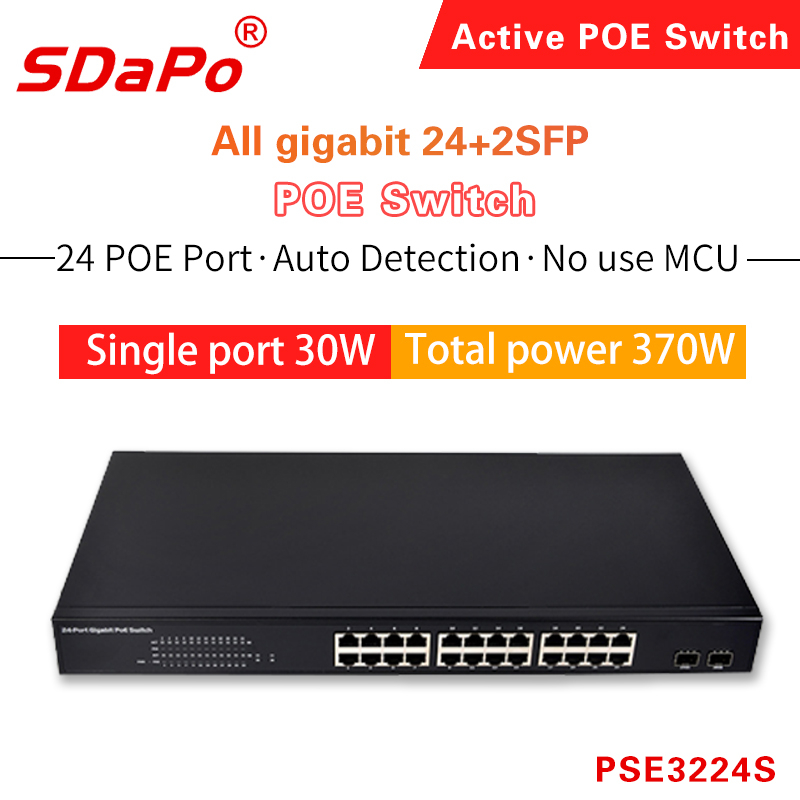
A PoE switch is a networking device that combines data switching and power delivery into a single unit. This integration allows the switch to send both electrical power and data to connected devices, such as VoIP phones, wireless access points, and other networked equipment. By using a PoE switch, organizations can streamline their installations, reducing the need for separate power cables and outlets.
When a device is connected to a PoE switch, it automatically receives the required power based on its specifications. This means you can easily deploy devices in various locations without worrying about finding nearby power sources. The technology behind PoE switches ensures that they can safely deliver power without damaging connected devices.
Number of Ports Available
PoE switches come in various configurations, offering different numbers of ports to accommodate multiple devices. For instance, models from SDAPO, like the PSE1008G, provide eight PoE ports, allowing you to connect several devices simultaneously. This feature is essential for businesses that require numerous powered devices operating within their network.
Management Capabilities
Many PoE switches offer advanced management features, such as VLAN support and monitoring capabilities. These features enable network administrators to configure and manage traffic effectively, ensuring optimal performance and security. Managed switches allow for greater control over network resources, making them ideal for larger organizations.
Scalability for Larger Networks
PoE switches are designed to scale easily. As your network grows, you can add more switches to expand your capacity. This scalability is crucial for businesses that anticipate future growth or need to add new devices regularly. With a PoE switch, you can expand your network without significant infrastructure changes.
Feature | Description |
Number of Ports | Varies by model; e.g., SDAPO's PSE1008G has 8 PoE ports. |
Management Capabilities | Includes VLAN support, monitoring, and traffic management. |
Scalability | Easily expandable to accommodate future growth. |
PoE switches can be categorized into two main types: managed and unmanaged.
Managed Switches
These switches offer advanced features, allowing for configuration and monitoring of network traffic. They provide tools for troubleshooting and optimizing performance, making them suitable for complex networks.
Unmanaged Switches
In contrast, unmanaged switches are simpler devices that require no configuration. They work out of the box, making them ideal for smaller networks or straightforward installations.Additionally, PoE switches differ in power standards: PoE, PoE+, and PoE++. Each standard dictates the amount of power delivered to connected devices. For example, PoE can deliver up to 15.4 watts per port, while PoE+ supports up to 30 watts, and PoE++ can provide up to 60 watts. This flexibility allows users to choose the right switch based on their specific power needs.
Type | Description |
Managed Switch | Configurable, offers monitoring and advanced features. |
Unmanaged Switch | Simple, plug-and-play functionality. |
Power Standards | PoE (15.4W), PoE+ (30W), PoE++ (60W) for various devices. |
Understanding these features and types helps businesses make informed decisions when selecting a PoE switch that fits their networking needs.
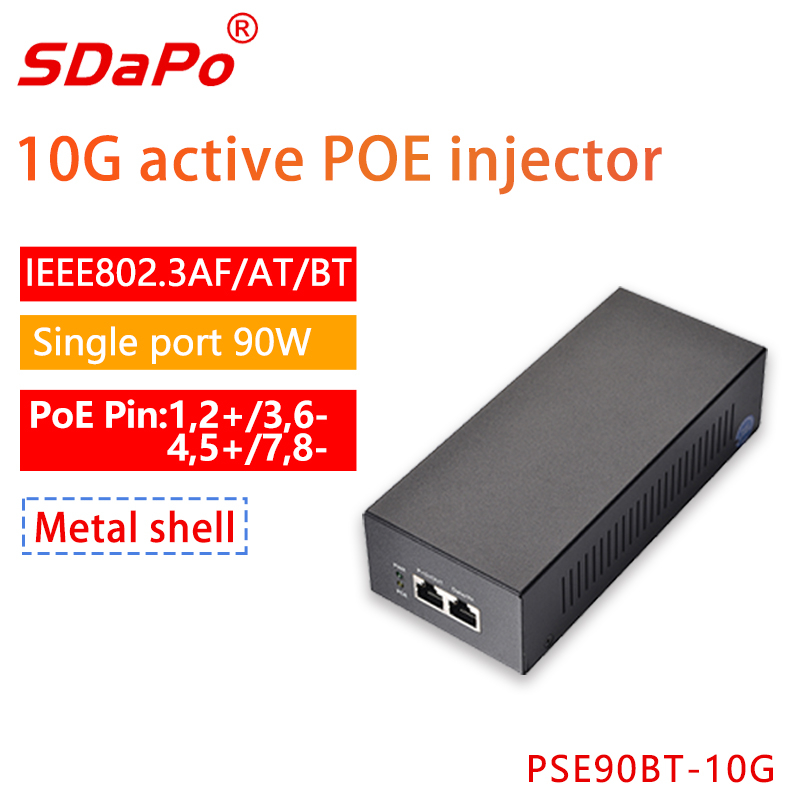
A PoE injector is a device designed to add power to non-PoE devices through an Ethernet cable. It acts as an intermediary, allowing devices that do not have built-in PoE capabilities to receive power alongside data. This is particularly useful for retrofitting existing networks, where you want to power devices without running additional electrical wiring.
When you connect a PoE injector to your network, it takes the data signal from your switch and injects power into the Ethernet cable. This means you can easily power devices like IP phones, wireless access points, or any other Ethernet-connected equipment that requires power but lacks PoE support. It's a simple solution that enhances the flexibility of your network setup.
Compatibility with Various Devices
PoE injectors are designed to work with a wide range of devices. They can power VoIP phones, network switches, and even some IoT devices. This versatility makes them an excellent choice for businesses looking to expand their network without overhauling existing infrastructure.
Types of PoE Injectors
There are two main types of PoE injectors: active and passive. Active injectors regulate the power they supply, making them suitable for devices that require specific power levels. In contrast, passive injectors provide a constant power output, which can be simpler but may not be compatible with all devices. Understanding these differences helps ensure you choose the right injector for your needs.
Power Output Specifications
Different PoE injectors offer varying power outputs, making it crucial to select one that meets your requirements. For instance, SDAPO’s PSE30WG-B injector delivers 30 watts of power, making it ideal for devices that need higher energy levels. This capability allows businesses to connect more demanding devices without issues.
Feature | Description |
Compatibility | Works with various non-PoE devices like IP phones and IoT gadgets. |
Types of Injectors | Active (regulates power) vs. Passive (constant output). |
Power Output | Varies; e.g., SDAPO's PSE30WG-B provides 30W. |
Using a PoE injector simplifies device installations and expands the potential for network setups. It allows for more flexible placement of devices, making it a valuable addition to any networking environment.
The primary difference between a PoE switch and a PoE injector lies in how they integrate power and data. A PoE switch combines both functions into a single device, allowing multiple devices to connect and receive power simultaneously through Ethernet cables. This integration simplifies network setups, as everything is managed from one unit.
In contrast, a PoE injector serves as an add-on device that injects power into a standard Ethernet cable for non-PoE devices. It connects between a network switch and the device needing power. While it effectively delivers power, it does not manage multiple connections like a switch does. This fundamental difference impacts how each device is used in various networking scenarios.
When it comes to the number of devices supported, PoE switches excel. They can power multiple devices at once, making them ideal for environments with numerous PoE-enabled equipment. For instance, a switch with eight ports can power eight devices simultaneously, which is efficient for larger setups.
On the other hand, a PoE injector typically supports a single device. This limitation can be a drawback in larger networks where multiple devices need power. For example, if you have several IP cameras, using multiple injectors can lead to a more complex and cluttered installation compared to a single PoE switch.
Device Type | Number of Devices Supported |
PoE Switch | Multiple devices (e.g., 8 ports for 8 devices). |
PoE Injector | Generally supports a single device. |
The ease of installation varies between the two devices. PoE switches can be straightforward to set up, as they connect directly to the network and provide power through existing Ethernet cables. This reduces the need for additional wiring and simplifies deployment.
Conversely, PoE injectors require a bit more setup. They need to be placed between the network switch and the powered device, which can complicate installations. Additionally, cable management becomes a consideration, as multiple injectors can create a tangled mess of cables if not organized properly.
When evaluating cost-effectiveness, it’s essential to consider both initial costs and long-term savings. PoE switches generally have a higher upfront cost due to their advanced capabilities. However, they provide long-term savings by minimizing installation costs and reducing the need for additional electrical outlets.
In contrast, PoE injectors are less expensive upfront, making them a budget-friendly option for smaller setups. They can be ideal for businesses looking to power a few devices without investing in a full switch. However, for larger networks, the cumulative cost of multiple injectors can exceed the cost of a single PoE switch.
Cost Consideration | PoE Switch | PoE Injector |
Initial Cost | Higher upfront cost | Lower upfront cost |
Long-term Savings | Reduced installation and maintenance | May require multiple units for larger setups |
Scalability is another area where PoE switches shine. They allow for easy expansion of the network as new devices are added. This makes them suitable for growing businesses that anticipate increasing their number of powered devices over time.
In contrast, PoE injectors are less scalable. As your network grows, you may need to add multiple injectors, which can complicate the setup. However, they do offer flexibility in terms of placement, allowing devices to be installed in locations without needing nearby power outlets. This can be advantageous in specific scenarios, such as retrofitting older buildings.
Scalability | PoE Switch | PoE Injector |
Scalability | Easily expandable for future growth | Limited scalability; requires multiple units |
Flexibility | Fixed placement based on switch location | Flexible placement for non-PoE devices |
Understanding these key differences helps businesses make informed decisions on whether to invest in a PoE switch or a PoE injector based on their specific networking needs.
In summary, PoE switches and PoE injectors serve different purposes. A PoE switch integrates power and data for multiple devices, while a PoE injector adds power to single non-PoE devices.
When choosing between them, consider your network size and device requirements. For larger setups, a PoE switch is often more efficient. For smaller installations, a PoE injector may be the better choice. Evaluate your specific needs to make the best decision.
A: Yes, a PoE injector allows devices to receive both power and data through the Ethernet cable.
A: No, a PoE injector does not affect Ethernet speed; it simply adds power to non-PoE devices.
A: PoE devices typically require between 15.4 watts (PoE) and 60 watts (PoE++) depending on their specifications.
A: Choose a PoE switch for multiple devices; use a PoE injector for single non-PoE devices.
A: Yes, you can use a PoE injector alongside a PoE switch to power additional non-PoE devices in your network.


