
5F, W2, Chengxin Building , Tian An Shen Chuang Valley Industrial Center, Fenggang Town, Dongguan City, Guangdong Province,China 523681
Views: 0 Author: Site Editor Publish Time: 2026-02-05 Origin: Site


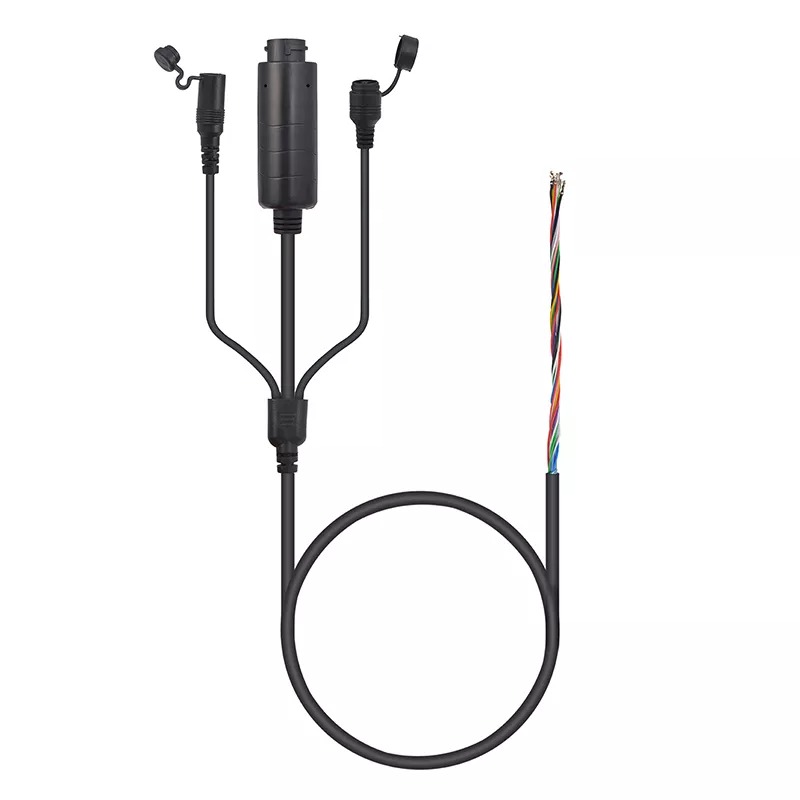
Power over Ethernet (PoE) has changed how we power modern devices. Today, devices such as VoIP phones, smart lighting, and access control systems often run on a single network line. As PoE becomes common, many installers and IT teams ask a simple question: can a normal Ethernet cable really work as a PoE cable? The short answer is yes—but only under the right conditions. Not every “standard” cable performs the same, and material, category, and build quality all matter.
In this article, we explain what counts as a normal Ethernet cable, how PoE safety detection works, and what makes a reliable PoE cable. You’ll also learn practical tips for choosing cables that support stable, long-term deployments.
When people say “normal” Ethernet cable, they usually mean Cat5e or Cat6—cables that have become standard in both commercial and residential installations. Here's a quick overview:
● Cat5: Rare today. Supports older 10/100 Mbps speeds. Not ideal for high-power PoE.
● Cat5e: Most common in current networks. Supports gigabit speeds and suitable for PoE.
● Cat6: Offers better shielding and performance. Ideal for high-speed networks and PoE++.
● Cat6a and above: Built for future-proofing with higher bandwidth and less crosstalk.
A critical factor is the cable material. There are two types:
● Solid Copper Conductors: Best choice. Lower resistance, better performance.
● Copper-Clad Aluminum (CCA): Cheaper, but higher resistance can cause overheating and voltage drop—especially risky for PoE use.
Power over Ethernet operates under defined IEEE standards:
Standard | Max Power (to device) | Minimum Cable Category |
802.3af (PoE) | 15.4W | Cat5 |
802.3at (PoE+) | 25.5W | Cat5e |
802.3bt (PoE++) | 60W–100W | Cat6 or higher |
Cat5e cables support all PoE types when constructed with solid copper and good shielding. But for high-power applications, such as devices requiring more than 30W, Cat6 or Cat6a is a safer, more reliable option.
Worried about plugging a non-PoE device into a PoE switch? Don't be.
PoE systems include a handshake mechanism. Before sending power, the switch sends a low voltage to detect if the connected device is PoE-compatible. Only then does it deliver the required wattage. This ensures safety for standard data devices using the same cable.
Using a PoE-capable switch with regular Ethernet cables doesn’t risk device damage, thanks to built-in negotiation protocols.
Not all Ethernet cables are created equal—especially when PoE is involved. Different categories offer different power-handling capabilities and performance over distance. While Cat5e is common and adequate for most basic needs, higher demands call for better cable types. Here’s a breakdown to help guide your selection:
Cable Category | Standard Support Level | Best For | Manufacturer Recommendation |
Cat5e | PoE / PoE+ | Basic devices like VoIP phones and smart lighting | Acceptable for standard loads |
Cat6 | PoE++ | Medium to high-power devices (up to ~60W) | Recommended by Sdapo |
Cat6a | PoE++ (up to 100W) | Long cable runs, dense enterprise installations | Preferred for max efficiency |
For powering anything above 30W or covering longer distances, both Cat6 and Cat6a outperform Cat5e in efficiency and safety. That's why experienced manufacturers like Sdapo often recommend Cat6 for commercial-grade PoE deployments.
CCA cables are tempting due to lower costs, but they present serious downsides:
● Higher electrical resistance = more heat
● Voltage drop over long distances
● Shorter cable life under continuous power draw
Solid copper conductors, by contrast, maintain performance and reduce fire hazards.
All PoE standards cap cable length at 100 meters (about 328 feet). This includes patch cables on both ends.
● However, voltage drop becomes more noticeable with:Higher power loads
● Poor cable quality
● Use of CCA
If you need longer runs, consider PoE extenders or active switches midway.
Tip: When designing office infrastructure, measure total cable path—not just straight-line distance—to ensure it stays within PoE guidelines.
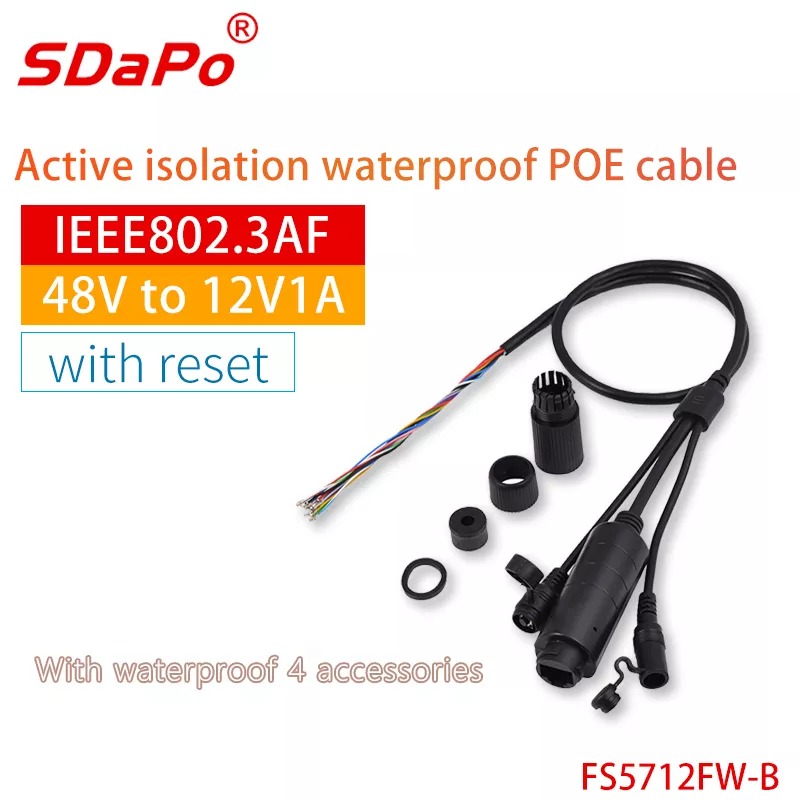
In many everyday business setups, standard Ethernet cables like Cat5e still perform reliably—especially when installed under the right conditions. From VoIP phones to smart lighting, these deployments don’t always require high-end cabling. Here’s how typical use cases align with standard PoE cable performance:
Scenario | Cable Type | Environment Condition | Power Class |
VoIP Phones / Smart Lighting | Cat5e patch | Indoor, under 100 meters | Class 1–2 (≤15W) |
PoE Injector / Midspan Solution | Cat5e or Cat6 | Retrofit into existing networks | Class 1–3 |
General Office Installations | Cat5e or higher | Short distances, no external EMI | Up to PoE+ (30W) |
As long as the PoE cable is Cat5e or higher and constructed from solid copper, it will support most low- to mid-power devices safely and efficiently—even in upgraded systems using injectors or midspan devices.
When PoE devices draw more than 30W, or cable runs become longer, standard wiring may no longer be enough. In these cases, cable type and protection level play a major role in maintaining stable power delivery and preventing heat buildup. The table below summarizes which cable choices fit different high-demand scenarios:
Deployment Need | Recommended Cable Type | Typical Application Examples | Key Benefit |
High-power devices (>30W) | Cat6 / Cat6a | High-power devices like smart lighting | Supports higher wattage safely |
EMI-heavy environments | Shielded Ethernet | Factories, equipment rooms, dense networks | Reduces interference and signal loss |
Outdoor or exterior runs | Outdoor-rated cable | Building-to-building links, exterior devices | Resists weather and UV exposure |
Long-distance PoE deployments | Cat6 / Cat6a | Extended cable paths | Lowers voltage drop and overheating |
Using high-performance cables in these situations helps reduce signal loss, maintain power stability, and prevent overheating—especially when supporting demanding PoE devices over longer distances.
Brands like Sdapo offer more than just PoE cables—they provide full PoE systems, including:
● PoE injectors and splitters
● Switches with built-in PoE++
● Modules tailored to custom power delivery scenarios
These products undergo high-temperature, surge, and performance testing to ensure reliability across complex deployments.
PoE brings real value to large-scale deployments by centralizing power and simplifying management. It reduces the need for electrical outlets, lowers costs, and speeds up troubleshooting. Here's a streamlined view of its key advantages:
Feature | Impact | Benefit |
Fewer wall outlets | Simplifies placement | Flexible device location |
One cable for power/data | Cleaner cabling | Faster, cheaper installs |
Centralized power control | Managed via switches/injectors | Remote reboot and control |
Less labor needed | No extra electrical work | Lower setup costs |
Unified power management | Easier fault isolation | Faster issue resolution |
PoE makes it easier to scale networks across buildings or campuses, while cutting down deployment time and operational effort.
In enterprise setups, consistency is key. Using the same cable type (e.g., Cat6 solid copper) across your organization ensures:
● Predictable performance
● Easier inventory management
● Scalable infrastructure
Companies like Sdapo, with over 12 years of experience in PoE technology, support both ODM and OEM deployments worldwide, offering tailored R&D support for long-term reliability.
Choosing the right Ethernet cable category is critical for ensuring PoE compatibility, bandwidth performance, and future scalability. While Cat5e supports most basic setups, higher categories offer better shielding and speed—especially under heavy power loads. The comparison below outlines key differences:
Cable Type | Bandwidth | Max Speed | PoE Compatibility | Shielding |
Cat5e | 100 MHz | 1 Gbps | PoE / PoE+ | Basic |
Cat6 | 250 MHz | 10 Gbps* | PoE++ Recommended | Better |
Cat6a | 500 MHz | 10 Gbps | PoE++ Ideal | Excellent |
Note: 10 Gbps at shorter lengths (up to 55m)
For high-power devices or future-ready installations, Cat6 or Cat6a cables offer clear performance and reliability advantages over Cat5e, especially in business or industrial environments.
To ensure long-term reliability and safety, it’s essential that your PoE cables meet recognized technical and quality standards. Always check that they conform to:
● ANSI/TIA-568-B.2 structured cabling standards
● AWG 24 or thicker conductors for stable power delivery
● Certifications such as CE, RoHS, FCC, and ISO 9001 for safety, material compliance, and quality control
Avoid using cables without proper labeling, datasheets, or verifiable specs. Even if they pass data transmission, non-compliant cables often fail under continuous PoE load, leading to heat buildup, signal loss, or device damage in real-world conditions.
Yes, you can use a normal Ethernet cable for PoE when it is Cat5e or higher and made from solid copper. Cat5e fits basic devices like VoIP phones or smart lighting, while Cat6 or Cat6a works better for higher power and longer runs.
For enterprise networks, Sdapo Communication Co., Ltd provides PoE cables, modules, and system solutions tested for stability and efficiency. Their products help teams build reliable infrastructure, reduce deployment risk, and support long-term network growth.
A: Yes, you can use a normal Ethernet cable—like Cat5e or Cat6—for PoE, as long as it's made of solid copper and meets industry standards.
A: A PoE cable must handle both data and power. Solid copper, proper shielding, and compliance with TIA standards make it suitable for PoE use.
A: Cat5e works for most PoE and PoE+ devices. However, for high-power needs (PoE++), Cat6 or Cat6a PoE cables are more reliable.
A: Poor-quality PoE cables, especially CCA ones, can overheat, cause voltage drops, and shorten device lifespan.
A: You can run a PoE cable up to 100 meters. Beyond that, you may face power loss unless you use repeaters or powered switches.
A: No. PoE systems use handshake detection to ensure power is only sent when needed, making it safe for regular Ethernet devices.


