
5F, W2, Chengxin Building , Tian An Shen Chuang Valley Industrial Center, Fenggang Town, Dongguan City, Guangdong Province,China 523681
Views: 0 Author: Site Editor Publish Time: 2026-06-30 Origin: Site


Integrating legacy edge devices into a modern 48V IEEE 802.3 infrastructure presents a significant interoperability challenge. Access control panels, environmental IoT sensors, and older IP cameras typically require much lower operational voltages. You cannot simply connect them to active power-sourcing equipment without inviting trouble. They demand precise power regulation to function correctly.
Supplying direct 48V to a 12V or 24V endpoint without proper step-down and data separation risks catastrophic equipment failure. Modern network switches deliver power intended only for fully compliant devices. Sensitive non-standard electronics easily burn out when hit by unmitigated power injections. Engineers need a reliable, failsafe method to bridge this critical gap.
This guide provides a robust technical evaluation framework for selecting the correct hardware module. We focus closely on precise voltage mapping, specific network throughput requirements, and stringent industrial reliability standards. You will learn exactly how to bridge distinct power ecosystems. We show you how to maintain flawless data transmission while protecting expensive network endpoints.
Voltage Matching is Critical: A PoE converter safely separates power and data, stepping down standard 48V (IEEE 802.3af/at/bt) to stable 5V, 12V, or 24V outputs without disrupting network signals.
Throughput Dictates Hardware: Selecting between a Gigabit POE Splitter and a Megabit POE Splitter depends entirely on the endpoint's bandwidth requirements (e.g., 4K PTZ cameras vs. low-data IoT relays).
Isolation Protects Investments: True commercial-grade converters require a minimum of 1500Vdc isolation to prevent surges from destroying connected non-PoE endpoints.
Active vs. Passive Risks: Relying on cheap, non-negotiating passive adapters introduces significant fire and hardware damage risks compared to active IEEE-compliant modules.
Many technicians assume a standard voltage regulator can step down network power. They are mistaken. A true PoE Converter is far more complex. It must cleanly demultiplex the DC power from the high-frequency Ethernet data transmission. Ethernet lines carry differential data signals alongside common-mode DC voltage. Specialized internal center-tapped transformers extract the electrical current. They simultaneously allow fragile data packets to pass untouched. A generic DC-DC regulator lacks these vital magnetics. Using one directly on a network cable corrupts data payloads instantly.
Network administrators often fear plugging legacy 24V passive devices into active 48V switches. They worry the higher voltage will incinerate the endpoint logic board. Active IEEE 802.3 standards utilize an internal handshake protocol. We call this a negotiated service. The power-sourcing equipment (PSE) sends harmless, low-voltage test pulses down the line. It looks for a specific 25k-ohm signature resistance. If the legacy endpoint fails to present this signature, the switch refuses to release the full 48V payload. A compliant module negotiates this process flawlessly. It guarantees voltage injection never occurs until it verifies full compatibility.
Organizations often rely on legacy industrial equipment boasting a 7-to-10-year lifespan. Replacing an entire warehouse of functioning 12V environmental sensors requires massive capital expenditure. Deploying specialized bridging modules offers a superior return on investment. You preserve existing infrastructure assets.
You avoid expensive labor costs associated with rewiring entire facilities.
You eliminate the need to configure brand-new IP addresses and software integrations.
You reduce electronic waste by extending the operational life of functional hardware.
You safely power older devices from modern, centralized battery-backed network switches.
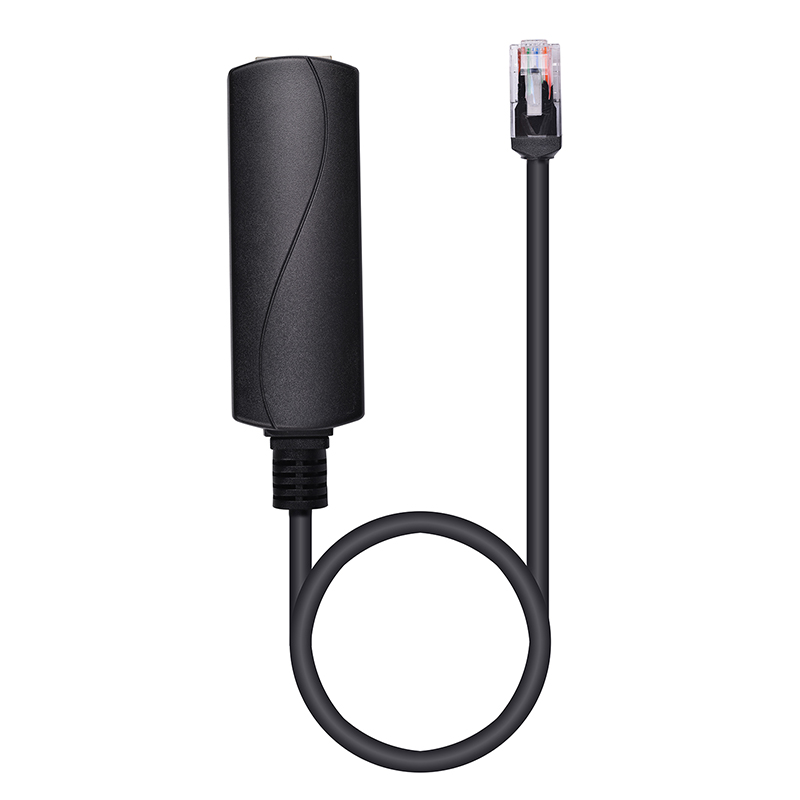
Small-scale computing devices operate almost exclusively on 5V logic. Target devices include Raspberry Pi controllers, basic environmental sensors, micro-controllers, and compact digital signage players. These units pull relatively low wattage. Furthermore, their data payload requirements remain minimal. A standard Megabit POE Splitter perfectly satisfies these throughput needs. It handles 10/100Mbps speeds effortlessly. By utilizing a 100Mbps module for low-bandwidth sensors, you optimize your procurement budget without sacrificing operational stability.
The 12V ecosystem represents the largest segment of commercial non-standard devices. Target hardware includes standard non-PoE IP cameras, access control door strikes, basic branch routers, and commercial AV equipment. These endpoints require a robust power delivery method alongside high-speed data. Modern video feeds, especially 4K streams, demand immense bandwidth. You must use a Gigabit POE Splitter to prevent latency spikes and dropped video frames. Stepping down to 12V ensures these cameras run cool and remain online during network fluctuations.
Industrial networking heavily favors 24V DC power architectures. Common target devices encompass legacy passive wireless access points, industrial programmable logic controllers (PLCs), and mobile vehicle CCTV systems. Older Ubiquiti gear frequently requires passive 24V inputs. Throughput needs vary wildly based on the specific backhaul requirement. When deploying power to these devices, installers must strictly adhere to DC polarity rules. Most utilize standard 5.5x2.5mm barrel jacks. Reversing the center-positive orientation will cause catastrophic board failure.
The following chart outlines how different voltages map to specific hardware and network speeds.
Output Voltage | Typical Endpoint Devices | Recommended Splitter Type | Primary Use Case |
|---|---|---|---|
5V DC | Raspberry Pi, IoT Sensors, Micro-controllers | Megabit (10/100Mbps) | Lightweight telemetry, basic automation |
12V DC | IP Cameras, Access Control, AV Gear | Gigabit (1000Mbps) | High-resolution video, security networking |
24V DC | Legacy APs, PLCs, Vehicle CCTV | Gigabit or Megabit (varies) | Industrial logic, legacy wireless bridging |
Engineers often assume standard network power remains at a constant 48V. Actual line voltage fluctuates significantly in the field. Equipment must accept a wide input range, typically spanning 36V to 60V. As electrical current travels over a 100-meter Cat6 cable run, resistance naturally causes voltage drop. Extreme thermal environments exacerbate this resistance. High-quality modules compensate for this input sag. They automatically adjust internal switching regulators to maintain a stable output regardless of the degraded input voltage.
You must demand verifiable galvanic isolation. True commercial modules provide at least 1500Vdc of isolation between the input and output stages. Non-isolated, cheap direct-connect modules pose a severe threat. They create physical electrical pathways connecting the switch to the endpoint. If a lightning strike induces a transient surge, an unisolated module passes that surge directly to the connected device. Galvanic isolation uses internal transformers and optocouplers to sever this physical connection. It protects sensitive microprocessors from ground loops and electrical spikes.
Stepping down voltage means nothing if the output fluctuates. Output voltage tolerance must remain within a strict ±5% margin. Precision regulation shields endpoints from erratic behavior. If a 12V output sags to 10.5V under heavy load, your IP camera will enter an endless reboot loop. Conversely, if the regulator spikes to 14V, it steadily degrades internal integrated circuits over time. High-grade capacitors and tight feedback loops guarantee the end device receives exactly what it expects.
Evaluating internal magnetics separates reliable hardware from budget alternatives. A fast network demands pristine signal integrity. A true gigabit module must maintain 10/100/1000Mbps negotiation without introducing crosstalk. Poorly wound internal transformers degrade the differential signaling. This causes silent packet loss. You eventually notice sluggish video feeds or delayed database queries. Legacy systems tolerate lower specs. You can safely utilize a Megabit module for simple 10/100Mbps links. It perfectly handles low-fidelity payloads without compromising basic connectivity.
Installers frequently deploy network gear in hostile environments. Ceiling cavities, outdoor enclosures, and factory floors lack climate control. High ambient temperatures increase cable resistance, directly exacerbating voltage drop. Commercial modules rated for 0°C to 40°C fail rapidly under these conditions. You must source industrial-grade hardware. Look for verified operating ranges spanning -20°C to +70°C. Quality units utilize thermal potting compounds to dissipate heat away from the PCB. This prevents component degradation and ensures long-term stability.
Network security begins at the physical layer. You must understand the difference between intelligent handshake compliance and passive forced injection. Active modules comply with 802.3af/at standards. They communicate with the switch, confirming safe power levels before closing the circuit. Passive injectors blindly force voltage down the wire. If a technician accidentally plugs a laptop into a passive port, the forced voltage destroys the network interface card. Active converters fundamentally protect your core switches from accidental shorts.
Localized endpoint failures should never bring down an entire switch port. You must mandate built-in electronic safeguards. Standard modules require three core defensive mechanisms:
Over-Voltage Protection (OVP): Instantly shuts down the output if internal regulation fails, preventing high voltage from reaching the endpoint.
Over-Current Protection (OCP): Cuts power when an endpoint attempts to draw more amperage than the module can safely supply, preventing localized fires.
Short-Circuit Protection (SCP): Isolates the connection if the output wires cross, keeping the upstream network switch safely insulated from the fault.
Procurement teams often overlook mechanical design. Installation realities dictate overall project costs. Modules lacking dedicated mounting brackets end up dangling freely from ceiling mounts. This places severe mechanical stress on RJ45 ports. Ambiguous polarity indicators confuse technicians, leading to reversed wiring and broken endpoints. Absent LED status lights turn basic troubleshooting into a lengthy guessing game. Features like interlocking tabs, clear labeling, and diagnostic LEDs drastically reduce labor costs during mass deployments.
Selecting the optimal power separation hardware prevents costly downtime and protects sensitive electronics. Follow a structured approach to narrow down your options efficiently. Do not guess your power requirements. A methodical evaluation guarantees system longevity and network stability.
Define the Endpoint Load: Calculate the exact required wattage. Multiply the endpoint's input voltage by its amperage. Map this figure to the corresponding IEEE tier. Use 802.3af for loads under 13W. Select 802.3at for devices requiring up to 30W. Opt for 802.3bt models for heavy-duty loads.
Match the Network Speed: Default to gigabit hardware for general future-proofing. Gigabit modules handle dense data effortlessly. However, if you are strictly deploying legacy low-bandwidth sensors, stepping down to megabit hardware intelligently reduces unit costs.
Verify Certifications: Aggressively filter out vendors lacking verifiable specification sheets. Ensure the hardware carries legitimate CE, FCC, and UL certifications. Demand transparent Mean Time Between Failures (MTBF) data to confirm industrial longevity.
Actionable Next Step: Conduct a physical audit of your edge devices immediately. Document their precise input voltage, required amperage, DC plug dimensions, and polarity orientation. Request sample units based on these metrics for localized bench testing before committing to a full rollout.
A: No. While amperage can be over-provisioned (the device only draws what it needs), voltage must precisely match. Applying 24V to a 12V circuit will instantly destroy the device.
A: Not if properly specified. A high-quality Gigabit POE Splitter utilizes isolated transformers that pass all four twisted pairs of data transparently without bottlenecking throughput. You will not experience packet loss or latency spikes on compliant hardware.
A: Transmitting power at a higher voltage (48V DC) exponentially reduces current. This minimizes heat generation and limits severe voltage drop over long (up to 100m) Ethernet cable runs, ensuring stable power delivery to the converter.
A: Nothing will happen. Because active PoE converters rely on IEEE handshake protocols, they will simply not draw power if the switch (PSE) does not initiate the correct negotiation. This prevents any accidental electrical damage to your standard networking gear.


