
5F, W2, Chengxin Building , Tian An Shen Chuang Valley Industrial Center, Fenggang Town, Dongguan City, Guangdong Province,China 523681
Views: 0 Author: Site Editor Publish Time: 2026-10-16 Origin: Site


Network engineers constantly face a frustrating operational friction in the field. They must manage mixed environments where modern standard 48V PoE+ infrastructure collides with 24V passive legacy devices. These legacy endpoints often include outdoor CPEs, wireless bridges, and RV park access points. Relying on clustered power injectors creates chaotic cabling setups and multiplies potential failure points. Alternatively, upgrading to expensive dual-mode switches is highly inefficient and increasingly difficult as manufacturers phase them out. You need a streamlined approach using inline conversion technology to bridge this protocol gap. This article provides an objective framework for evaluating, selecting, and deploying enterprise-grade converters. You will learn how to unify your network topology without compromising gigabit throughput or risking permanent hardware damage.
Unified Management: Deploying 48V to 24V converters allows administrators to retain centralized remote power cycling (reboot) capabilities from a primary 802.3af/at switch.
Physics Advantage: Transmitting power at 48V over long cable runs minimizes voltage drop, stepping down to 24V only at the network edge (near the endpoint).
Safety Imperative: Commercial viability requires converters with ≥1500V RMS magnetic isolation to prevent cross-talk and equipment burnout.
Throughput Verification: Not all converters guarantee true 10/100/1000Mbps pass-through; verifying gigabit capability is critical for modern wireless bridge applications.
Modern enterprise networks operate on strict standards. The IEEE 802.3af, 802.3at, and 802.3bt protocols dictate how power travels over ethernet. These standards use active negotiation. The switch asks the connected endpoint how much power it requires before sending any voltage. Passive PoE devices operate entirely differently. They expect a continuous, always-on 24V DC supply. They cannot negotiate. When you plug a 24V passive outdoor access point directly into a modern 48V switch, the switch detects no handshake. It refuses to send power. If forced, the 48V surge can instantly destroy the 24V radio.
Network administrators previously solved this gap using dual-mode switches. These specialized units allowed technicians to toggle individual ports between 48V active and 24V passive power. However, sourcing these legacy switches is now cost-prohibitive. Manufacturers are aggressively phasing them out in favor of standardized 802.3bt models. Replacing your entire core switching infrastructure merely to support a few legacy outdoor bridges wastes significant IT budget. It also locks your architecture into aging hardware platforms.
Many IT teams fall back on localized power injection. They install a 24V PoE Injector for every single outdoor radio. This approach creates massive operational risks. Ten wireless bridges require ten independent power bricks clustered in the server room. This multiplies your single points of failure. Cabling becomes messy and unmanageable. More importantly, this breaks remote management. If a rooftop radio locks up at 2 AM, the administrator cannot simply log into the switch software to reboot the port. Someone must physically drive to the site and unplug the injector from the wall.
Power transmission follows basic laws of physics. Sending power over long copper runs creates resistance. Higher voltage reduces the required current for a specific wattage. Lower current directly translates to less voltage drop and less heat generation. Sending 48V across 100 meters of Cat6 cable is highly efficient. The voltage may drop slightly, but the active switch easily compensates. If you inject 24V at the source, the voltage drop over that same distance is severe. The endpoint might only receive 18V. This causes random reboots and hardware instability during heavy loads. Converting the power from 48V down to 24V directly at the device edge prevents these transmission losses entirely.
Low-voltage integrators value uptime above all else. Driving out to a remote RV park simply to unplug a frozen access point wastes valuable labor hours. Edge converters solve this permanently. The converter draws its power natively from the managed 48V switch. If the 24V endpoint freezes, the network administrator simply logs into the primary switch controller. They disable and re-enable PoE on that specific port. The switch cycles power to the converter. The converter subsequently reboots the passive endpoint. You regain full environmental control without rolling a truck.
Inline conversion modules act functionally similarly to a PoE Extender, expanding the usable footprint of legacy 24V hardware at the edge of a modernized 48V network. You no longer need separate infrastructure for distinct hardware generations. A single unified switch can now power IP cameras, VoIP phones, and legacy 24V bridges simultaneously. This flexibility accelerates deployments. Installers can run standard cable drops anywhere, knowing a simple inline adapter can adapt the final power delivery to match whatever endpoint they mount.
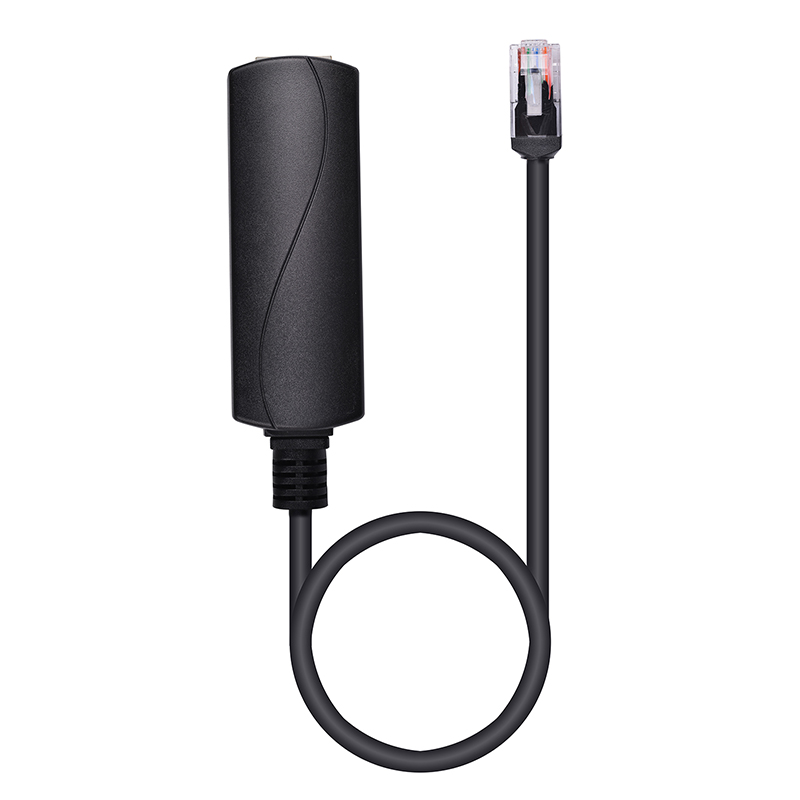
Long cable runs inherently cause voltage fluctuations. A high-quality converter must handle these variances gracefully. You should verify its acceptance of wide voltage inputs. The ideal range sits between 36V and 60V DC. This ensures the unit remains operational even if the cable run causes significant line loss. Additionally, you must ensure clear compliance with 802.3af and 802.3at protocols on the input side. Support for the newer 802.3bt standard provides higher power overhead, which is excellent for demanding base stations.
Budget converters frequently fail in outdoor deployments. They lack internal magnetic isolation. This crucial component physically separates the power delivery circuit from the data transmission lines. Without it, voltage spikes easily jump across circuits. The enterprise standard requires converters possessing ≥1500V RMS isolation. Furthermore, the unit needs built-in electrical surge and short-circuit suppression. If lightning strikes near the outdoor antenna, or static builds up during a snowstorm, the converter must sacrifice itself to protect the expensive upstream switch.
Marketing terminology often misleads buyers. Many converters claim to be "Gigabit compatible." This usually means you can plug a gigabit cable into them without breaking the physical connection. However, they may only negotiate data at 100Mbps. For modern wireless bridge applications, this creates a massive bottleneck. The converter must guarantee true "Gigabit throughput." It should support a clean 10/100/1000Mbps data rate. It must do so without introducing latency or dropping data packets under heavy transmission loads.
Outdoor access points face extreme weather conditions. The conversion equipment supporting them must survive the exact same environment. You must require industrial temperature ratings.
Temperature Range: The device must operate flawlessly from -40°C to +70°C.
Housing Material: Look for metal housings. They provide necessary EMI (Electromagnetic Interference) shielding against nearby radio frequencies.
Mounting Accessories: Ensure the availability of weatherproof accessory kits or sealed enclosures for external mounting on poles or towers.
Specification Category | Minimum Requirement | Operational Benefit |
|---|---|---|
Input Voltage Range | 36V - 60V DC | Absorbs line-loss over long Cat6 runs |
Magnetic Isolation | ≥1500V RMS | Prevents ground loops and protects the PSE |
Data Speed | True 10/100/1000Mbps | Prevents bottlenecks on PtP wireless bridges |
Operating Temperature | -40°C to +70°C | Ensures cold-weather boots and summer stability |
The market is flooded with sub-$15 adapter modules. These passive converters employ basic mechanics. They often rely on simple resistor networks or cheap buck-converters to blindly step down voltage. They completely lack active handshake protocols. When connected to a switch, they trick the PSE into sending power by presenting a static resistance value. This creates enormous risk. If the step-down circuit fails, the device may pass the full 48V directly to your 24V endpoint, instantly destroying it. We observe remarkably high failure rates with these budget devices within the first year of outdoor deployment.
Professional deployments require intelligent hardware. Devices in the $25-$45 tier utilize active microchips. They actively negotiate with the 802.3af/at PSE to draw power correctly. They identify themselves properly, request the exact wattage needed, and establish a secure power link. Only then do they provide a safer, isolated 24V DC 0.5A (12W) output to the connected Powered Device (PD). Commercial deployments favor active conversion. The reliability gains and hardware protection far outweigh the initial purchase price of the module.
Feature | Passive Converter (Budget) | Active Smart Converter (Enterprise) |
|---|---|---|
IEEE Handshake | No (Fakes resistance) | Yes (Full 802.3af/at negotiation) |
Over-voltage Protection | Rarely included | Standard internal feature |
Failure Risk Profile | High (Passes surges to endpoint) | Low (Isolates surges via magnetics) |
Target Application | Temporary lab testing | Permanent outdoor field deployments |
Wiring expectations dictate system success. Passive 24V devices typically require Mode B pinouts to receive power correctly. In this configuration, Pins 4 and 5 carry the positive direct current (DC+). Pins 7 and 8 carry the negative return path (DC-). Data travels across the remaining pins. You must rigorously clarify these wiring expectations before installation. Ensure the selected converter perfectly aligns with your specific CPE’s pinout requirements. Mismatched pinouts will result in a dead device, or worse, internal short circuits.
Engineers often overlook the reality of cable degradation. Even with a 48V to 24V POE Converter deployed efficiently at the edge, substandard wiring ruins network performance. Many contractors install Copper-Clad Aluminum (CCA) cables to save money. CCA cables possess significantly higher electrical resistance than pure copper. This resistance causes catastrophic voltage drop over distances exceeding 30 meters. It generates excess heat inside the cable bundle. You must specify pure bare copper cabling for all PoE deployments. Cat5e is the absolute minimum standard, though Cat6 is highly preferred. Additionally, always use shielded RJ45 terminations for outdoor runs to safely drain static electricity.
System designers must carefully audit power budgets. Remind your field engineers to strictly verify the output wattage limits of the conversion equipment. Most standard 24V converters max out at either 12W (0.5A) or 24W (1A). You must ensure this output capacity securely meets the peak draw of the wireless bridge. Radios consume significantly more power during heavy data transmission or cold-weather startup sequences. If a radio requires 15W during boot-up, a 12W converter will trap it in an endless reboot cycle. Always calculate a 20% safety margin into your power delivery math.
Bridging the gap between modern infrastructure and legacy endpoints requires strategic planning. The inline conversion module acts as an inexpensive, vital bridge. It preserves your existing 24V hardware investments while allowing the core network to cleanly standardize on 802.3af/at/bt protocols. You eliminate localized power bricks, clean up your server racks, and regain critical remote management capabilities over outdoor equipment.
When selecting your hardware, prioritize intelligent designs. Shortlist converters offering true magnetic isolation, active IEEE negotiation, and verified gigabit pass-through speeds. Avoid budget modules lacking over-voltage protection.
Your immediate next steps involve detailed auditing. Audit your current 24V endpoint network to determine precise wattage requirements for each radio. Validate your primary 48V switch’s total power budget across all active ports. Once you confirm these metrics, you can confidently procure active converter units in bulk for your next large-scale field deployment.
A: No. Standard switches use active negotiation. They will not detect the passive device, meaning no power will be sent. If forced, it could severely damage the 24V device.
A: High-quality active converters typically add negligible latency. This ranges from less than 1μs during operation to roughly 300ms for initial boot negotiation. It will not impact gigabit data throughput or real-time application performance.
A: Ideally, place the converter as close to the 24V endpoint as possible. This allows the higher 48V voltage to traverse the longest part of the cable, minimizing line loss and heat generation.
A: Yes. They eliminate the need for localized 24V wall-wart injectors. Instead, they draw safe, negotiated power directly from your central managed PoE switch.


